AODEQI · BUYING & APPLICATION GUIDES
Fiber vs UV vs CO₂ vs MOPA: Which Laser Should You Buy?
Compare fiber, UV, CO2 and MOPA laser marking by material, surface effect and production requirements. Learn what to request in a sample test.
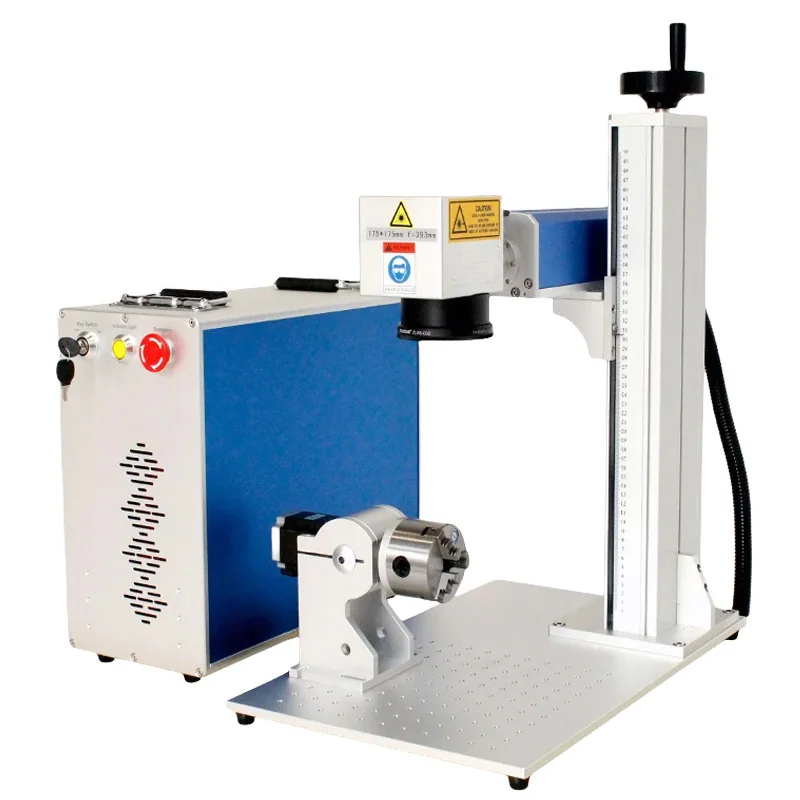
Fiber, UV, CO₂ and MOPA often appear in the same laser marking comparison, but the names describe different things. Fiber, UV and CO₂ commonly identify source technologies or wavelength families. MOPA describes a fiber-source architecture that can provide additional pulse control. Selecting between them requires understanding the material surface, required mark and complete workstation. This guide compares their practical roles without treating one technology as the universal winner or assuming that a successful result on one sample transfers unchanged to another material batch.
Start with the surface, not the industry name
Begin with the substrate
An electronics factory may mark metal heat sinks, polymer connectors, circuit boards and coated labels. Those applications do not automatically belong to one laser family. Describe the exact surface that receives the mark, including resin formulation, alloy, plating, paint, anodizing and finish. Identify whether the laser should remove a layer, create surface contrast or produce measurable depth. When the supplier understands both the surface and the desired change, the comparison becomes much more useful than a list of industries claimed on a brochure.
Where fiber marking is a practical starting point
Evaluate the marking process
Pulsed fiber laser marking machines, commonly operating at 1064 nm in this product range, are frequently evaluated for metal serial numbers, logos and engraving. Suitable stainless steel, aluminum, brass, copper and other alloys can respond differently according to their finish and the chosen process. Some selected polymers also respond, but that does not make a conventional fiber source the default for all plastics. Ask to see the required contrast, character quality and surface condition on your own part. Evaluate deeper engraving separately from a light identification mark.
What UV changes in the selection process
UV laser marking at 355 nm can be useful for fine details on suitable plastics, glass and electronics. Its shorter wavelength and material interaction can reduce unwanted thermal effects in appropriate applications. However, the commercial phrase “cold marking” should not be interpreted as a guarantee of zero heat or zero damage. A resin can discolor, a coating can change and glass can develop unacceptable surface effects if the process is unsuitable. Inspect the marked surface and, where necessary, test electrical, mechanical or optical properties after marking.
The role of CO₂ for non-metal work
CO₂ laser markers are commonly considered for suitable wood, acrylic, leather, paper and packaging surfaces. The required effect may be engraving, frosting, surface removal or a change in appearance. Material composition is important: coatings, adhesives, fillers and treatments can change both the result and the extraction requirement. Do not assume that every material sold under a broad category is appropriate for laser processing. Bare metal identification normally calls for another source or a separately qualified marking method, rather than an unsupported direct substitution of CO₂ for fiber.
Why MOPA belongs within the fiber discussion
A MOPA fiber laser may offer adjustable pulse duration and a broader range of process combinations than a particular fixed-pulse source. The available range depends on the actual source model and power class. Additional control can help evaluate fine contrast, controlled surface removal, dark marks on selected anodized aluminum and color effects on suitable stainless steel or titanium. It does not make every metal produce every color. Ask which source settings are available on the quoted machine and which settings produced the approved sample.
Compare color, contrast and depth separately
A white identifier on black anodized aluminum, a dark mark on a stainless instrument and a multicolor decorative pattern are different requirements. A process that is excellent for removing a colored surface layer may not preserve that layer's protective function. A deep engraved mark may remain readable after wear but can be unacceptable on a thin or highly stressed component. Provide a description of the permitted surface change as well as the appearance. Where durability matters, assess the mark after the service conditions or finishing steps relevant to your product.
Consider workstation and handling differences
The source is only part of the machine. Field size, available focus adjustment, fixture access, scanner behavior and controller integration can affect the result as much as the technology label. A flat sample held comfortably on a bench may not represent a large installed component or a small curved connector. If part handling is difficult, compare a fixed workstation with a suitable handheld or integrated arrangement. Confirm the guarding and extraction for the complete installation. An improved material interaction does not remove the need for a properly planned laser operating environment.
Ask suppliers to run a comparable test
Provide the same artwork, marked area, material samples and acceptance conditions to each supplier. Request a full-cycle recording, clear photos, the tested configuration and any required post-process inspection. Avoid judging two systems from videos using different fonts, different fill areas or different materials. Record whether a rotary accessory, special coating or additional cleaning step was used. A fair comparison identifies what is necessary to reproduce the result and whether those components and services are actually included in the quotation.
Build a shortlist around the required evidence
For a metal identification project, begin with Fiber and consider MOPA if additional pulse control addresses a specific requirement. For a sensitive plastic or fine electronics mark, include UV testing. For suitable organic and non-metal surfaces, assess CO₂. Then eliminate candidates that fail the actual acceptance test, even if their nominal specifications look attractive. The AODEQI comparison overview provides a concise starting point; a sample test connects that overview to your own component. Select the demonstrated process and complete configuration, not simply the most powerful or most versatile-sounding name.